As autumn winds begin to whisper through the trees, the unmistakable aroma of roasting chestnuts fills the air, evoking cozy memories and seasonal traditions. For centuries, people have gathered around crackling fires to enjoy these earthy treasures, yet the perennial challenge of removing their stubborn shells has remained a culinary hurdle. While various methods have been attempted—from tedious hand-peeling to risky knife work—a remarkably simple kitchen technique has emerged as the ultimate solution. By harnessing the dry, consistent heat of a standard oven, you can transform this arduous task into an almost effortless ritual, preserving both the nut's integrity and the cook's patience.
The science behind this method is as elegant as it is effective. Chestnuts contain a significant amount of moisture within their starchy flesh, and when subjected to high heat, this water rapidly turns to steam. The resulting pressure builds against the tough, leathery shell until it naturally fractures along its seam. At 180°C (approximately 350°F), the oven provides the ideal environment for this controlled expansion. The heat is intense enough to create sufficient steam pressure to force the shell open but gentle enough to avoid scorching the delicate kernel inside. This ten-minute window is the sweet spot where the structural integrity of the shell is compromised without beginning to cook the nutmeat thoroughly, leaving it perfect for further preparation in stuffings, purees, or simply enjoyed on their own.
Preparation is key to ensuring consistent results. Begin by selecting chestnuts that feel heavy for their size, with smooth, unblemished shells—a sign of freshness and ample moisture content. Using a sharp paring knife or a specialized chestnut scorer, carve a long, shallow 'X' on the flat side of each nut. This crucial step cannot be overlooked, as it provides a controlled exit point for the built-up steam. Without this incision, the pressure would have nowhere to go, potentially causing the chestnuts to explode messily inside your oven, much like unpopped popcorn kernels. The cut needs to be deep enough to pierce the tough outer shell but should not slice deeply into the flesh itself.
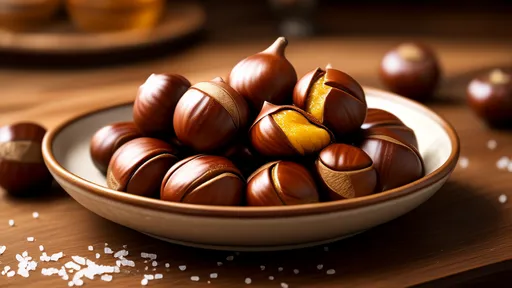
Arrange the scored chestnuts in a single layer on a baking sheet, ensuring they are not crowded. This allows the hot air to circulate freely around each nut, promoting even heating and uniform opening. Place the tray in the preheated oven and set a timer. Within minutes, you will begin to hear a faint, percussive popping—a satisfying auditory confirmation that the process is working. After the ten minutes have elapsed, carefully remove the baking sheet. You will be greeted by a pan of chestnuts, most of which will have split open dramatically along the scored lines, their golden interiors peeking through the parted shells.
The magic of heat transfer does not end when the oven door opens. It is imperative to transfer the blisteringly hot chestnuts immediately into a heatproof bowl and cover them tightly with a lid or a clean kitchen towel. This creates a mini steam bath, a critical phase often called "sweating." The residual heat continues to work, loosening the thin, bitter inner skin (the pellicle) that clings tenaciously to the nutmeat. After five to ten minutes of steaming under cover, they will be cool enough to handle. The once formidable shells and skins will now peel away with astonishing ease, often in large, satisfying pieces, revealing the whole, unbroken sweet nut within.
This oven-roasting technique is far superior to boiling, which can waterlog the nuts and dilute their flavor, or microwaving, which often leads to uneven results and a rubbery texture. The dry heat of the oven concentrates the chestnut's natural sugars, enhancing their signature sweet and slightly smoky flavor profile. The resulting product is versatile, ready to be used immediately in both savory and sweet applications, from a classic turkey stuffing and creamy soups to decadent Mont Blanc desserts and rich chocolate tortes. Any extras peel and freeze beautifully, locking in their quality for future culinary exploits.
Beyond the sheer practicality, this method connects us to a larger culinary heritage. It is a small kitchen hack that honors the ingredient, maximizing efficiency without sacrificing quality or taste. It turns a tedious chore into a quick, almost theatrical kitchen event, demystifying a process that has intimidated home cooks for generations. So the next time a bag of fresh chestnuts finds its way into your kitchen, embrace the heat. Ten minutes at 180°C is all that stands between you and a bowl of perfectly peeled, delicious chestnuts, ready to become the star of your autumnal feasts.
By /Aug 20, 2025

By /Aug 20, 2025

By /Aug 20, 2025
By /Aug 20, 2025

By /Aug 20, 2025
By /Aug 20, 2025

By /Aug 20, 2025
By /Aug 20, 2025
By /Aug 20, 2025
By /Aug 20, 2025
By /Aug 20, 2025
By /Aug 20, 2025
By /Aug 20, 2025
By /Aug 20, 2025
By /Aug 20, 2025
By /Aug 20, 2025

By /Aug 20, 2025
By /Aug 20, 2025
By /Aug 20, 2025
By /Aug 20, 2025
