In the world of culinary preparation, few tasks seem as simple yet carry such hidden risks as handling grapes. These sweet, juicy fruits are beloved by people of all ages, but their perfect spherical shape and smooth texture present a surprising choking hazard, particularly for young children and elderly individuals. The danger lies not in the grape itself, but in its ability to completely block a child's narrow airway if swallowed whole. This has led to a growing movement among parents, caregivers, and food safety advocates to promote a simple yet revolutionary technique: the cross-cut method for grape preparation.
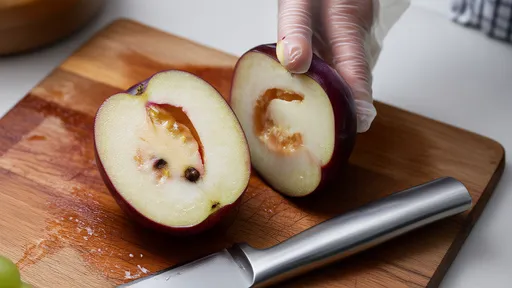
The traditional way of serving grapes—plucked straight from the stem and handed over—is being rightfully questioned and replaced. The cross-cut technique is disarmingly straightforward. Instead of serving grapes whole or merely halving them, you make two perpendicular cuts, effectively quartering the fruit while leaving a small section of the skin connected at the base. This method doesn't just make the pieces smaller; it fundamentally alters their shape, transforming the dangerous sphere into a collection of irregular, wedge-shaped pieces that are far less likely to cause an obstruction if swallowed prematurely.
Why is this specific cut so much more effective than simple halving? The science behind choking hazards provides a clear answer. A whole grape is almost perfectly designed to seal a child's trachea. Halving a grape simply creates two smaller, yet still dangerously round and pliable, hemispheres. These halves can still form an effective seal over the airway. The cross-cut, however, creates long, thin pieces with pointed ends. This new shape prevents the fruit from forming a tight seal, allowing air to continue to pass even if a piece is inadvertently swallowed without being chewed thoroughly. It’s a small change in prep time for an immeasurable gain in safety.
Adopting this practice requires a shift in mindset, viewing fruit preparation not just as a culinary step but as an integral part of childproofing a home. It should become as automatic as buckling a seatbelt. The process is quick and easily integrated into your kitchen routine. After washing a bunch of grapes thoroughly, place a single grape on a cutting board. Using a small, sharp paring knife, make a vertical cut from the top almost to the bottom, stopping just short of severing it completely. Then, rotate the grape 90 degrees and make a second identical cut perpendicular to the first. You’ll now have a grape that fans open into four segments, all held together by a tiny hinge of skin at the bottom, making it easy for small hands to pull apart.
Beyond the critical safety aspect, this method offers unexpected practical benefits for daily life. For toddlers who are mastering the pincer grasp, these pre-cut, pull-apart grapes are significantly easier to handle than slippery whole grapes or even halves. They promote independence at mealtime while reducing mess. Furthermore, the increased surface area means that more of the grape's natural sugars are exposed, making them taste slightly sweeter and more appealing to picky eaters. For lunchboxes, these cross-cut grapes are ideal; their structure makes them less likely to roll around and easier for children to eat quickly during a short school lunch period.
The importance of this technique is underscored by sobering statistics from health organizations worldwide. Choking remains a leading cause of injury and death among young children, and food is the most common culprit. Grapes consistently rank among the top three most dangerous foods, alongside hot dogs and hard candies. Public health campaigns in several countries have now officially endorsed the cross-cutting method, and many pediatricians have begun to include it in their standard safety advice for new parents during well-child visits. Spreading awareness is crucial, as many caregivers are simply unaware of the hazard or the simple solution that exists.
While the focus is often on children, the elderly population also benefits greatly from this approach. As people age, they can experience a decline in chewing strength, coordination, and saliva production, all of which increase the risk of choking. Dementia or neurological conditions can further impair the complex swallowing process. Serving cross-cut grapes to older adults, especially those in care facilities, is a thoughtful and preventive measure that preserves their dignity and allows them to enjoy a healthy snack without fear. It’s a universal precaution that spans generations.
Implementing this safety measure is about more than just individual action; it's about creating a new cultural norm. When friends, family, and daycare providers see this practice, it normalizes it and encourages wider adoption. If you are hosting a playdate or a party, taking the time to prepare grapes safely sends a powerful message about your commitment to child safety. It sparks conversations and has a ripple effect, potentially influencing other parents to adopt the practice themselves. This collective shift in behavior has the power to prevent countless accidents and tragedies.
Of course, no preparation method can replace active supervision during mealtimes. Teaching children to sit down while eating, to take small bites, and to chew thoroughly are fundamental lessons in food safety. The cross-cut technique is a vital engineering control—a way to make the food itself safer—but it works best as part of a multi-layered strategy that includes education and vigilance. It is one of the most effective tools in a parent's arsenal to create a safe eating environment.
In conclusion, the act of cutting a grape with two perpendicular slices is a profound example of how a minimal intervention can have a maximum impact on safety. This simple choking prevention hack deconstructs a hidden danger and rebuilds it into a safe, enjoyable, and convenient snack. It empowers caregivers, protects the vulnerable, and fosters a culture of proactive prevention. Making the cross-cut a non-negotiable step in your kitchen is a small price to pay for the immense peace of mind that comes with knowing you have eliminated a significant and preventable risk from your family's table.

By /Aug 20, 2025

By /Aug 20, 2025

By /Aug 20, 2025
By /Aug 20, 2025

By /Aug 20, 2025

By /Aug 20, 2025

By /Aug 20, 2025

By /Aug 20, 2025
By /Aug 20, 2025
By /Aug 20, 2025

By /Aug 20, 2025

By /Aug 20, 2025
By /Aug 20, 2025
By /Aug 20, 2025

By /Aug 20, 2025

By /Aug 20, 2025

By /Aug 20, 2025

By /Aug 20, 2025

By /Aug 20, 2025

By /Aug 20, 2025
